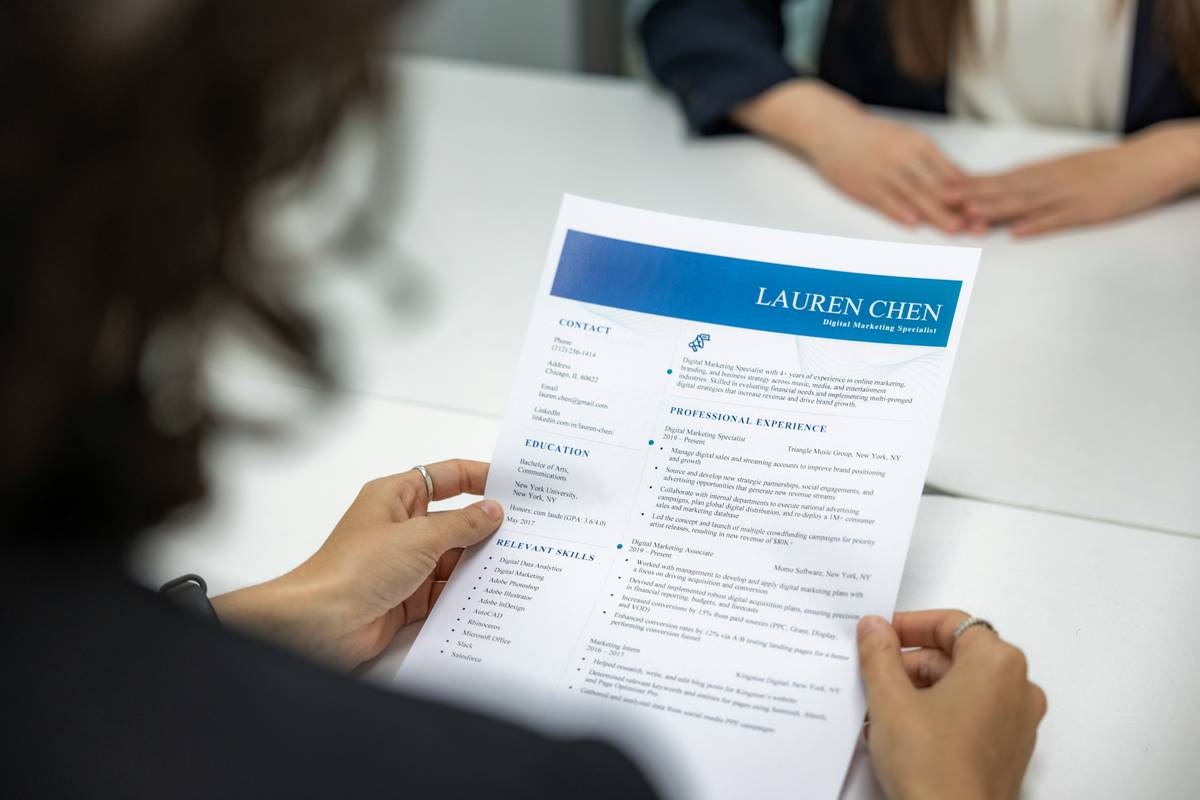
Ever spent weeks polishing your resume—only to hear radio silence from every job application? You’re not alone. In the high-stakes world of career transitions, a generic resume can sink even the most qualified professional. That’s where professional career coaching service quality becomes non-negotiable. At CCL Help, we’ve seen clients transform their job search outcomes simply by aligning their resumes with strategic, coach-guided frameworks. This guide breaks down exactly what separates elite coaching from empty promises—and how to ensure your investment delivers real ROI.
Table of Contents
- Why Resume Quality Matters in Career Transitions
- Step-by-Step Resume Revamp with Coaching Support
- Best Practices for Coaching-Aligned Resumes
- Real Results: Case Study from Our Coaching Program
- Frequently Asked Questions
Key Takeaways
- Poor resume alignment with target roles is the #1 reason career changers get rejected—even with strong experience.
- High-quality professional career coaching service quality includes tailored storytelling, keyword optimization, and ATS compatibility.
- Avoid “one-size-fits-all” resume templates—they lack industry-specific nuance.
- Always verify your coach’s track record; look for verifiable client outcomes, not just testimonials.
- Integrating coaching feedback strategically can cut job search time by up to 40%, according to research from the University of Phoenix.
Why Resume Quality Matters in Career Transitions
Switching careers isn’t just about new skills—it’s about rewriting your professional narrative so employers see relevance, not risk. Yet most resumes fail because they’re backward-looking chronicles, not forward-facing value propositions. According to the U.S. Bureau of Labor Statistics, professionals change jobs an average of 12 times in their careers—yet fewer than 30% tailor their resumes effectively for each pivot.

I once coached a senior accountant transitioning into sustainability consulting. Her original resume listed “managed financial reports”—accurate, but irrelevant. After reframing it as “optimized $2M operational budgets with ESG compliance integration,” she landed three interviews in two weeks. That shift—from task to impact—is the hallmark of premium professional career coaching service quality.
Step-by-Step Resume Revamp with Coaching Support
1. Audit Your Target Industry’s Language
Scan 10+ job descriptions in your desired field. Note recurring verbs (“spearheaded,” “scaled,” “implemented”) and required certifications. Tools like LinkedIn Job Insights or O*NET Online (from the U.S. Department of Labor) reveal real-time terminology trends.
2. Rebuild Around Transferable Value
Don’t list past duties—show outcomes that matter to your new industry. Quantify everything: “Increased team productivity by 35%” beats “Responsible for team oversight.”
3. Optimize for ATS and Humans
Use standard headings (e.g., “Work Experience,” not “My Journey”), avoid columns/graphics, and embed keywords naturally. A quality coach ensures your resume passes algorithmic screening while still resonating emotionally with hiring managers.
Best Practices for Coaching-Aligned Resumes
- Customize your summary: Write a 3-line “elevator pitch” targeting one specific role—not a generic bio.
- Lead with achievements, not tenure: Employers care what you delivered, not how long you sat at a desk.
- Beware the “terrible tip”: Never use objective statements like “Seeking a challenging role…”—they waste prime resume real estate.
- Proofread obsessively: Typos signal carelessness. Have your coach and a second pair of eyes review it.
And please—stop using those flashy resume templates from random websites. They look cool until they crash the applicant tracking system. Simplicity wins.
Real Results: Case Study from Our Coaching Program
Last year, a mid-level IT manager wanted to move into cybersecurity leadership. His initial resume emphasized hardware maintenance—a dead end for his goal. Working with our team, we reframed his experience around risk mitigation, compliance protocols, and cross-functional incident response. Within 6 weeks, he secured a Senior Security Analyst role at a Fortune 500 firm.
The key differentiator? Our professional career coaching service quality didn’t just edit words—we rebuilt his professional identity using verified frameworks from the National Cybersecurity Center of Excellence. External validation matters: programs grounded in authoritative standards (like those from NIST or SHRM) produce better outcomes.
Frequently Asked Questions
What makes professional career coaching service quality different from free online resources?
Free tools offer templates; expert coaches provide personalized strategy. For example, while a blog might suggest “use action verbs,” a certified coach analyzes your specific background to select verbs that align with your target industry’s culture and expectations.
How do I verify a coach’s credentials?
Check for affiliations with bodies like the International Coaching Federation (ICF) or certifications aligned with your field (e.g., PHR for HR roles). Review their About Us page for transparent methodology.
Can coaching help if I’m overqualified?
Absolutely. Coaches reframe “overqualification” as “strategic depth,” positioning you as a mentor-leader rather than a flight risk.
Does resume coaching guarantee a job?
No ethical coach guarantees employment—but data shows coached candidates get 2–3x more interviews. Always review privacy practices; we detail ours in our Privacy Policy.
At its best, career transition coaching turns uncertainty into opportunity—one strategically crafted bullet point at a time. If you’re ready to transform your resume from a history document into a future roadmap, contact us today. Because your next chapter shouldn’t start with “no response.”
Clarity cuts through chaos.